
Audiophile speakers transcend the ordinary, promising an unparalleled listening experience. From meticulously crafted components to sophisticated design, these speakers offer a journey into sonic perfection. This exploration delves into the intricacies of audiophile speakers, examining their construction, technology, and the nuances of achieving optimal sound.
This comprehensive guide provides a detailed overview of the key characteristics that distinguish audiophile speakers, covering everything from speaker driver technologies to room acoustics and speaker placement strategies. Understanding these factors is critical to achieving the full potential of your audio system.
Defining Audiophile Speakers
Audiophile speakers represent a significant leap beyond typical consumer-grade models, demanding a level of precision and performance rarely found in everyday audio systems. Their meticulous design and high-quality materials are engineered to reproduce sound with exceptional fidelity, exceeding the capabilities of standard speakers. This dedication to sonic accuracy sets audiophile speakers apart, offering listeners a deeper, more nuanced listening experience.Beyond basic playback, audiophile speakers are meticulously crafted to deliver an immersive and detailed auditory journey.
The difference lies in a comprehensive approach to sound reproduction, from the materials used to the intricate design of the speaker cabinet and drivers. The goal is to minimize distortion and maximize the accuracy of the original sound source, resulting in a listening experience that is both captivating and informative.
Key Characteristics of Audiophile Speakers
Audiophile speakers are distinguished by their exceptional accuracy, precision, and wide frequency response. They excel in reproducing the subtle nuances and complexities of the original audio recording. This superior fidelity allows listeners to appreciate the intricate details and dynamics of a wide range of musical genres. This superior sound quality is crucial in genres that require a high level of accuracy, like classical music or jazz.
Design Elements Contributing to Superior Audio Quality
Several key design elements contribute to the superior audio quality of audiophile speakers. First, the speaker cabinet plays a crucial role in minimizing unwanted resonance and vibrations. Sophisticated cabinet designs, often utilizing specific wood types or composite materials, effectively dampen sound distortions, leading to a more accurate and controlled sound. Second, high-quality drivers, crafted from lightweight, rigid materials, are critical for precise and dynamic sound reproduction.
These drivers are capable of handling high frequencies with accuracy, delivering a full and balanced soundstage. Third, meticulously engineered crossover networks ensure that the different frequency ranges are seamlessly blended, preventing harshness or muddiness in the overall audio.
Materials Used in High-End Audiophile Speakers
High-end audiophile speakers frequently employ premium materials known for their acoustic properties. Wood, such as exotic hardwoods like walnut or cherry, is often used for speaker cabinets due to its inherent resonance-dampening qualities. Furthermore, specialized composite materials, meticulously chosen for their acoustic neutrality, are also increasingly employed. These materials, often including carefully selected polymers or alloys, contribute to the overall clarity and precision of the speaker’s performance.
The careful selection of materials minimizes unwanted coloration or distortion of the original sound.
Types of Audiophile Speakers
Audiophile speakers come in various configurations, each optimized for specific listening environments and applications. These diverse configurations cater to a wide range of preferences and needs.
- Bookshelf Speakers: Compact and versatile, bookshelf speakers are ideal for smaller listening spaces, often in home offices or apartments. Their relatively small size is well-suited for smaller rooms, providing a balanced and detailed sound. Their portability also allows easy placement in various locations within the room. They excel in reproducing the mid-range and high-frequency details of the music, providing a lively and engaging listening experience.
- Floorstanding Speakers: These larger speakers are known for their robust bass response and ability to fill larger rooms with sound. Their size and design allow them to reproduce a broader range of frequencies, including deep bass notes. Floorstanding speakers are frequently preferred for their capacity to deliver a more expansive and immersive sound experience.
- Center Channel Speakers: Critical for cinematic sound reproduction, center channel speakers deliver dialogue and ambient sounds with clarity and precision. This ensures that viewers hear all of the important audio cues in the movie, significantly enhancing the overall viewing experience.
Speaker Technology and Performance
Audiophile speakers, prized for their nuanced sound reproduction, often employ sophisticated driver technologies and intricate designs. Beyond the aesthetic appeal, these speakers are built on meticulous engineering choices that impact the sonic characteristics, from the subtle nuances of a whispered melody to the powerful crescendos of a symphony. Understanding these choices provides a crucial insight into the meticulous pursuit of audio perfection.
Speaker Driver Technologies
Different speaker driver technologies yield distinct sonic signatures. The choice of driver material and design significantly influences the speaker’s ability to reproduce a wide range of frequencies accurately. Cone drivers, a common choice for their relatively low cost and broad frequency response, rely on a paper or polymer cone that vibrates to generate sound waves. Dome drivers, often employed for high-frequency reproduction, feature a lightweight diaphragm that is precisely shaped to produce clear, detailed treble tones.
Ribbon drivers, known for their exceptional clarity and high efficiency, leverage a thin metal ribbon that vibrates in a magnetic field to produce exceptionally detailed and airy sounds.
Performance Characteristics of Driver Technologies
Cone drivers, due to their relatively simple design, are often used in mid-range and low-frequency applications. Their performance varies depending on the materials used and manufacturing techniques. Dome drivers excel at reproducing high frequencies with remarkable clarity and detail. The lightweight nature of the diaphragm minimizes distortion, contributing to a smooth and extended high-frequency response. Ribbon drivers, with their low mass and high stiffness, are known for their extremely low distortion and high efficiency, translating into a very detailed sound and a wide frequency range.
Speaker Impedance and Sensitivity
Speaker impedance, measured in ohms, dictates how much resistance the speaker offers to the flow of electrical current. A speaker’s sensitivity, measured in decibels per watt (dB/W), determines its ability to produce sound from a given amount of power. Speakers with lower impedance can experience issues with amplifiers that are not properly matched, while higher impedance speakers are often more stable and reliable.
Sensitivity is crucial for proper system matching. A speaker with high sensitivity requires less power to produce a loud sound, making it more efficient and potentially easier to integrate into an existing audio system.
Crossover Designs
Crossovers are crucial components in multi-way speaker systems. They are designed to divide the audio signal into different frequency bands, directing each band to the appropriate driver for optimal reproduction. Different crossover designs, from passive to active, have varying effects on sound quality. A well-designed crossover helps prevent unwanted distortion and ensures each driver operates within its optimal frequency range.
A poorly designed crossover, conversely, can result in muddy mid-ranges or harsh treble, hindering the overall sound quality.
Frequency Response
Frequency response describes the range of frequencies a speaker can accurately reproduce. An ideal frequency response curve would be flat across the audible spectrum, indicating consistent reproduction across all frequencies. In reality, speaker designs inherently have variations. The frequency response of audiophile speakers is carefully engineered to achieve a smooth, consistent response throughout the audible spectrum, minimizing unwanted peaks and dips.
Variations in frequency response can significantly affect the overall perceived sound quality, impacting the nuances of the music.
Audiophile Speaker Design Considerations
The pursuit of audio perfection extends beyond simply choosing a speaker model. A nuanced understanding of speaker design elements—from enclosure types to placement strategies—is crucial for achieving the desired sonic experience. Careful consideration of these factors unlocks the potential for a truly immersive and detailed audio presentation.
Speaker Enclosure Types
Speaker enclosure types significantly impact low-frequency response and overall sound quality. Different enclosures are designed to manage the pressure waves generated by the speaker drivers, affecting bass frequencies and the overall sonic character.
| Enclosure Type | Pros | Cons |
|---|---|---|
| Sealed | Generally smooth, natural midrange and high-frequency response. Often exhibit a tighter, more controlled bass. | Limited low-frequency extension compared to ported designs. May struggle with producing deep bass notes. |
| Ported (Bass Reflex) | Enhanced low-frequency extension, allowing for deeper and more impactful bass response. Often more efficient in terms of power handling. | Can exhibit a boomy or uncontrolled bass response if not properly designed. May exhibit some resonance issues at specific frequencies. |
| Bass Reflex | Provides a balance between deep bass and controlled output. Typically a good balance of bass extension and controlled sound. | Slightly more complex design than sealed, demanding more attention to tuning for optimal performance. |
Speaker Placement Considerations
The location of speakers in a room is critical to their performance. Sound waves interact with the room’s geometry, affecting the perceived balance and overall quality of the audio.
- Room Acoustics: Room dimensions, wall materials, and furniture placement influence sound reflections and resonances. Understanding these factors is key to optimizing sound quality.
- Speaker Distance: The distance between the listening position and the speakers is crucial for achieving a balanced soundstage and stereo imaging. Maintaining a consistent distance between speakers and the listening position is often recommended.
- Speaker Height: Speaker height impacts the soundstage and the perceived spatial characteristics of the audio. The ideal height depends on room dimensions and the intended listening experience.
- Wall Proximity: Placement near walls can affect bass response, sometimes causing undesirable resonances or cancellations. Careful consideration is necessary to avoid these issues.
Speaker Damping Materials
Damping materials within the speaker enclosure absorb vibrations and energy, reducing unwanted resonances and improving the clarity and definition of the audio.
High-quality damping materials contribute significantly to reducing unwanted sonic artifacts.
These materials, often made from materials like mineral wool or specialized foams, work by dissipating energy that would otherwise contribute to unwanted vibrations.
Speaker Cable Types
Speaker cables, while often overlooked, play a significant role in audio fidelity. The quality and type of cable can influence signal transmission and reduce losses, resulting in a more accurate and detailed audio presentation.
- Material: Different materials (copper, silver, or copper alloys) offer varying levels of conductivity and signal transmission characteristics.
- Gauge: The cable’s gauge affects its ability to handle the current demands of the speaker system. Thicker gauges are often preferred for higher power requirements.
- Shielding: Shielding materials reduce interference from electromagnetic fields, which can affect signal integrity and introduce noise.
Speaker Stands
Speaker stands, beyond their aesthetic role, significantly affect audio performance. By elevating speakers from the surface, they reduce the transmission of vibrations from the floor to the speakers, leading to improved clarity and a more precise soundstage.
- Vibration Isolation: Properly designed stands can effectively isolate the speakers from unwanted vibrations in the room, resulting in cleaner and more precise audio reproduction.
- Soundstage Enhancement: Speaker stands can influence the perceived soundstage by providing more controlled positioning and reducing reflections from the floor.
- Aesthetics: Aesthetics of speaker stands are important in maintaining a harmonious audio setup. Matching the style of stands to the speaker and the overall aesthetic of the room can elevate the overall listening experience.
Audiophile Speaker Brands and Models
The world of audiophile speakers extends beyond mere sound reproduction; it’s an exploration of meticulous craftsmanship, cutting-edge technology, and a dedication to achieving the pinnacle of sonic fidelity. Choosing the right audiophile speakers demands careful consideration of brand reputation, technological advancements, and the specific sonic characteristics sought by the listener. This section delves into the realm of renowned brands and their most popular models, offering a comparative analysis of key specifications and providing insights into the nuances of pricing.
Renowned Audiophile Speaker Brands
Several brands consistently earn acclaim for their commitment to high-quality audiophile speakers. These include brands like KEF, B&W, Dynaudio, and Focal, each known for its unique approach to speaker design and manufacturing.
Popular Audiophile Speaker Models
Within these respected brands, numerous models stand out for their technical prowess and sonic performance. Popular choices include the KEF Reference series, B&W 800 Series Diamond, Dynaudio Confidence series, and Focal Sopra series.
Comparative Specifications of Audiophile Speaker Models
A comparative analysis of speaker models reveals subtle yet significant differences in their technical specifications. These differences translate to variations in sonic characteristics and overall performance.
| Model | Frequency Response (Hz-kHz) | Sensitivity (dB) | Impedance (Ω) | Driver Type |
|---|---|---|---|---|
| KEF Reference 3 | 40-25,000 | 88 | 4 | Uni-Q |
| B&W 800 Diamond Series | 40-25,000 | 89 | 4 | Magnesium/Aluminium |
| Dynaudio Confidence C1 | 50-25,000 | 90 | 4 | Ceramic/Aluminium |
Comparing Strengths and Weaknesses of Two Brands
Comparing KEF and B&W reveals key differentiators. KEF excels in its use of advanced technologies like the Uni-Q driver array, delivering a smooth, balanced soundstage. B&W, on the other hand, is known for its impactful bass and dynamic range, particularly well-suited for listeners who prioritize robust and powerful sound. Both brands are leaders in the industry, but KEF emphasizes precision and detail, while B&W emphasizes dynamism and power.
Pricing Range for Audiophile Speakers
The pricing for audiophile speakers varies significantly based on the complexity of the design, the quality of materials, and the advanced technology employed. Models like the KEF Reference series typically command a premium price, while other models in the mid-range cater to various budgets. A wide spectrum of price points exists, allowing consumers to find models that meet their financial and sonic requirements.
Room Acoustics and Speaker Interactions
The performance of even the most meticulously crafted audiophile speakers is significantly influenced by the room in which they are placed. Room acoustics, encompassing reflections, standing waves, and absorption, can dramatically alter the perceived soundstage, clarity, and overall listening experience. Understanding these interactions is crucial for achieving optimal audio fidelity.Room acoustics exert a profound impact on sound quality. Uncontrolled reflections from walls, ceilings, and floors can create echoes, blurring the soundstage and muddying the nuances of the music.
Standing waves, resonant frequencies within the room, can cause undesirable peaks and dips in the frequency response, leading to uneven tonal balance. These issues, often imperceptible to the untrained ear, can significantly degrade the listening experience for audiophiles, diminishing the enjoyment of their high-fidelity investments.
Influence of Room Acoustics on Sound Quality
Room acoustics profoundly shape the perceived sound. Hard surfaces like walls and floors reflect sound waves, creating echoes and altering the perceived soundstage. Soft furnishings, rugs, and curtains absorb sound, reducing reflections and improving clarity. Standing waves, resonant frequencies within the room, can cause undesirable peaks and dips in the frequency response, resulting in a distorted sound.
These phenomena affect the overall balance and clarity of the audio, and their impact is particularly noticeable in high-fidelity systems.
Methods to Mitigate Room Acoustic Issues
Several strategies can mitigate the negative effects of room acoustics. Strategic placement of acoustic treatment materials can absorb excess reflections and reduce standing waves. Utilizing strategically positioned bass traps, designed to absorb low-frequency energy, can effectively address low-frequency issues. These treatments are particularly important for larger rooms or rooms with hard surfaces.
Speaker Placement in a Room
Speaker placement within the room is critical. The positioning of speakers relative to the listening position and room boundaries significantly affects the perceived soundstage, stereo image, and overall sonic presentation.
Speaker Placement Strategies for Different Room Shapes
Optimal speaker placement varies depending on the room’s shape and dimensions. In rectangular rooms, speakers should be positioned equidistant from the listening position and at an angle that avoids significant reflections from the side walls. In rooms with irregular shapes, strategic placement becomes more crucial, often necessitating acoustic measurements and experimentation to optimize the sound.
Acoustic Treatment and Its Application for Audiophile Speakers
Acoustic treatment involves the strategic placement of materials designed to absorb, diffuse, or redirect sound waves. Bass traps, designed to absorb low-frequency energy, are often placed in corners to address standing waves. Diffusers, which scatter sound waves, can improve the spaciousness and clarity of the soundstage. These treatments are especially important in larger or reverberant rooms and enhance the performance of audiophile speakers by minimizing unwanted reflections and resonances.
For example, strategically placed acoustic panels can significantly reduce the harshness of reflections from hard surfaces, improving clarity and naturalness in the sound. Acoustic treatments, therefore, are essential for audiophiles to realize the full potential of their speakers.
Listening Experiences and Subjectivity

The pursuit of the perfect audio experience is deeply intertwined with personal preferences and the unique acoustics of the listening environment. Audiophiles often describe their experiences with a nuanced vocabulary, revealing the subtle differences between speakers that might escape objective measurements. This subjective element is a critical component of the audiophile journey, as it shapes the very definition of “quality” for each individual.While scientific measurements provide valuable insights into speaker performance, they often fail to capture the emotional resonance and aesthetic appreciation that drive the passion for high-fidelity sound.
Ultimately, the “best” speaker for a listener depends not just on its technical specifications, but also on the listener’s subjective interpretation of sound.
Subjective Nature of Audio Preferences
Individual listening preferences are shaped by a complex interplay of factors. Musical taste, prior listening experiences, and even the listener’s emotional state all influence their perception of sound. A listener deeply immersed in classical music might prioritize a particular speaker’s ability to reproduce the delicate nuances of string instruments, while a rock enthusiast might be more focused on the power and impact of the bass frequencies.
This variability underscores the subjective nature of audio preferences, rendering direct comparisons challenging and often futile.
Impact of Listening Environments
The acoustics of a listening room profoundly affect how audiophile speakers perform. Room dimensions, materials, and furniture placement can significantly alter soundstage, imaging, and overall tonal balance. A room with excessive reverberation, for instance, can obscure the clarity of the sound, while a room with poor bass absorption can lead to muddiness and boominess. Even seemingly minor changes, such as the positioning of a sofa or the addition of a rug, can dramatically impact the listening experience.
Approaches to Evaluating Speakers
Evaluating audiophile speakers necessitates a multi-faceted approach that considers both objective metrics and subjective impressions. While measurements like frequency response and sensitivity are essential, they don’t fully capture the nuanced qualities of sound that contribute to the overall listening experience. A holistic evaluation considers the speaker’s ability to reproduce the desired sonic characteristics, its impact on the listener’s emotional response, and how well it integrates into the listening environment.
A good starting point is to listen to a variety of music genres and styles, allowing the listener’s preferences to guide the evaluation process.
Conducting a Blind Listening Test
A blind listening test is a crucial tool for evaluating audiophile speakers objectively. By removing the listener’s preconceived notions about the speakers, the test isolates the pure sonic qualities. Ideally, multiple listeners participate, recording their impressions without knowing which speaker they are listening to. This removes the bias inherent in pre-existing knowledge of the speaker’s brand or reputation.
Careful documentation of the listening experience, including specific sonic observations, is essential to derive meaningful conclusions. Listeners should focus on specific details like timbre, imaging, soundstage, and overall tonal balance.
Describing the Sound of Audiophile Speakers
A rich vocabulary is essential for effectively describing the sound of audiophile speakers. Listeners should focus on specific attributes like timbre, dynamics, imaging, soundstage, and tonal balance. Descriptions should be precise and evocative, avoiding vague terms like “good” or “bad.” Instead, use concrete descriptors like “rich and warm,” “crisp and detailed,” or “powerful and impactful” to convey the speaker’s unique sonic characteristics.
A comparison table can aid in the articulation of the perceived differences between speakers.
| Speaker | Timbre | Dynamics | Imaging | Soundstage | Overall Impression |
|---|---|---|---|---|---|
| Speaker A | Smooth and detailed | Energetic and controlled | Precise and well-defined | Spacious and immersive | Highly recommended |
| Speaker B | Warm and inviting | Powerful and impactful | Natural and engaging | Full and dynamic | Excellent for live music |
Speaker Maintenance and Care
Preserving the pristine sonic performance of audiophile speakers demands meticulous care. Proper maintenance not only extends the lifespan of these sophisticated components but also ensures their continued ability to reproduce the nuanced sonic characteristics they were designed for. Ignoring this crucial aspect can lead to degraded sound quality, reduced longevity, and ultimately, a less fulfilling listening experience.Maintaining the integrity of audiophile speakers is an investment in the long-term enjoyment of high-fidelity sound.
Careful handling, appropriate cleaning, and preventative measures will significantly contribute to the speakers’ longevity and optimal performance.
Importance of Preventative Maintenance
Preventative maintenance is crucial for preserving the delicate components and ensuring consistent performance. Regular checks and cleaning will prevent the accumulation of dust, debris, and other contaminants that can impede sound quality and compromise the structural integrity of the speakers. This proactive approach safeguards against potential damage, ensuring that the speakers remain in optimal condition for years to come.
Preventative Maintenance Steps
- Regularly inspect the speaker cabinets for any signs of damage, such as cracks, dents, or warping. This early detection allows for prompt action and prevents further deterioration.
- Periodically clean the speaker grilles and enclosures using a soft, lint-free cloth to remove dust and accumulated debris. Avoid harsh chemicals or abrasive materials, as they could scratch or damage the finish.
- Check the connections between the speaker terminals and the amplifier for any signs of corrosion or loosening. Ensuring a secure and clean connection is essential for optimal signal transmission and preventing potential electrical issues.
- Monitor the speakers’ overall performance regularly to identify any changes in sound quality or unusual noises. Early detection of anomalies allows for prompt troubleshooting and resolution.
Cleaning Speaker Components
Thorough cleaning of speaker components is vital for preserving their pristine condition. Careful cleaning practices will maintain the performance and aesthetic appeal of the speakers. Employing the correct methods will prevent scratching or damage to the speaker’s sensitive components.
- Use a soft, dry brush or a compressed air duster to remove dust and debris from the speaker’s grilles, cabinets, and internal components. This delicate approach prevents scratches and damage.
- For more stubborn grime or dust, dampen a soft cloth with a mild, non-abrasive cleaning solution and gently wipe the affected surfaces. Avoid submerging speaker components in water or using harsh chemicals that could compromise the finish or internal circuitry.
- If necessary, use a cotton swab dipped in a suitable cleaning solution to clean small crevices or hard-to-reach areas. Be cautious when using cotton swabs, ensuring they are not too rough or abrasive.
- Thoroughly dry all cleaned surfaces to prevent moisture damage and ensure optimal performance. This step is vital to maintain the integrity of the speaker’s components.
Handling and Storage Procedures
Proper handling and storage are crucial to the long-term health and performance of audiophile speakers. Carefully handling and storing speakers will minimize the risk of damage and ensure their continued sonic excellence.
- Handle speakers with care, avoiding dropping or forcefully impacting them. Use both hands to support the speaker cabinets and avoid any sudden movements that could lead to damage.
- Store speakers in a cool, dry environment away from direct sunlight, extreme temperatures, and excessive humidity. These conditions will help prevent warping, cracking, or other potential damage.
- Protect speakers from dust and debris by covering them with appropriate dust covers when not in use. This step safeguards against accumulating dust and other contaminants.
- Store speakers in a stable, level position to prevent any potential distortion or damage to the internal components. A stable platform is essential for long-term preservation.
Preventing Speaker Damage
Taking proactive steps to prevent damage will safeguard the speakers’ investment and performance. Avoiding harsh treatment and recognizing potential risks are essential for preserving the speakers’ integrity.
- Avoid placing speakers on unstable surfaces or in locations prone to vibrations or impacts. This preventative measure safeguards against accidental damage and distortion.
- Do not expose speakers to excessive heat, cold, or moisture. This proactive step safeguards the speakers’ components from potential damage.
- Ensure that the speakers are not overloaded beyond their specified capacity. This step prevents damage to the speakers’ internal components and maintains their performance.
- Inspect and maintain the speaker wires for any signs of damage or wear. This preventative step ensures uninterrupted signal transmission and optimal performance.
Cost Considerations and Budget Options
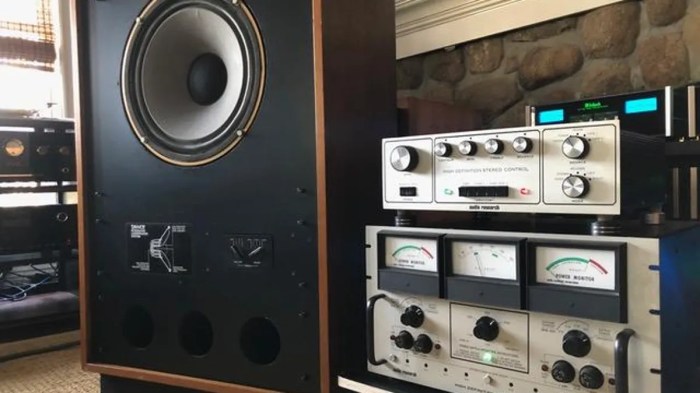
Audiophile speakers, renowned for their exceptional sound quality, often command a premium price. Understanding the factors driving this cost is crucial for navigating the market and finding suitable options within a budget. From meticulously crafted drivers to sophisticated cabinet designs, each component contributes to the overall price point.The pursuit of unparalleled audio fidelity necessitates high-quality materials, advanced manufacturing techniques, and often, specialized engineering.
This commitment to precision and detail translates into a tangible cost, which, while potentially substantial, can be balanced by carefully considering budget options and trade-offs.
Factors Contributing to High Speaker Costs
The premium price tag associated with audiophile speakers stems from several intertwined factors. High-quality drivers, often featuring exotic materials like beryllium or carbon fiber, are crucial for accurate and dynamic sound reproduction. These materials, while expensive, enhance the speaker’s ability to handle a wider range of frequencies with exceptional clarity and precision. Sophisticated cabinet designs, meticulously engineered to minimize unwanted resonance and maximize acoustic performance, further contribute to the overall cost.
The labor involved in the manufacturing process, including intricate assembly and finishing, also plays a significant role in the final price.
Budget Options for Achieving Good Audio Quality
A range of budget options allows for access to satisfying audio experiences. Used speakers, often representing significant savings, can offer surprisingly high quality. However, thorough inspection and careful consideration of the speaker’s history are paramount. Manufacturers offer a variety of models across different price points, with each offering a unique balance of features and performance. For instance, a speaker with slightly less advanced driver technology might still provide exceptional sound quality at a lower cost.
Consideration of components such as integrated amplifiers and pre-amplifiers also influence the total cost of the setup. Carefully evaluating the trade-offs between price and performance is crucial in this area.
Trade-offs Between Price and Performance
Selecting audiophile speakers involves navigating a spectrum of price points and performance levels. While higher-priced speakers frequently deliver superior sound quality and detail, this comes at a premium. Budget-conscious consumers may opt for speakers with less advanced drivers and cabinets, potentially sacrificing some aspects of the audio experience. However, many models at the lower end of the spectrum can still deliver a rich and engaging listening experience, especially within specific genres and room environments.
The key lies in understanding the trade-offs and aligning the chosen speakers with the intended listening environment and personal preferences.
Finding Used Audiophile Speakers Within a Budget
The used market offers a compelling opportunity to acquire high-quality audiophile speakers at a fraction of their original cost. Online marketplaces and audio forums are valuable resources for discovering pre-owned speakers. Crucially, verifying the speaker’s condition and history is essential. A thorough inspection, including checking for damage and verifying the speaker’s provenance, is recommended. Seeking advice from experienced audio enthusiasts or professionals can also provide valuable insights and support in the purchasing process.
A Cost-Effective Audiophile Speaker Setup
A cost-effective audiophile speaker setup can be achieved by prioritizing components based on their impact on the sound experience. For example, a pair of well-regarded, used speakers from a reputable brand can form a solid foundation. Pairing these speakers with a high-quality, used integrated amplifier can significantly enhance the sound quality. Adding a high-quality subwoofer can further expand the soundstage and add depth to the bass response, providing a balanced and enriching experience at a more manageable price point.
Careful consideration of each component’s impact and a thorough listening evaluation are vital in crafting a cost-effective and satisfying audiophile setup.
Connecting Audiophile Speakers to Systems

The journey from raw audio signal to immersive sound experience hinges critically on the connection between speakers and the rest of the audio system. Careful consideration of input options, signal routing, and cable types is paramount for maximizing the potential of high-end speakers. Subtle nuances in these connections can significantly impact the overall sonic quality, influencing everything from clarity to dynamics.Choosing the right connection method and ensuring optimal impedance matching is key to achieving the best sound reproduction.
A meticulously crafted signal path, free from interference and impedance mismatches, allows the audio signal to reach the speakers without distortion, revealing the subtle nuances and intricate details of the original recording.
Audio Input Options
A diverse range of audio input options are available, each with its own characteristics. Digital inputs, such as coaxial and optical, are increasingly common, offering high resolution and minimal signal degradation. Analog inputs, including RCA and XLR connectors, remain popular choices for their compatibility with various audio components and their ability to preserve the sonic character of the source material.
The selection of input method will depend on the source material, the type of audio equipment, and the desired sound quality.
Connecting Speakers to Amplifiers and Receivers
Speaker wire is critical for maintaining signal integrity. High-quality speaker wire, with low capacitance and resistance, is essential for minimizing signal loss and distortion. Ensure proper wire gauge and length based on the speakers’ impedance and the amplifier’s output capability. Incorrect wiring can lead to unwanted noise and diminished sound quality. Use appropriate speaker terminals and ensure secure connections to prevent signal loss and potential damage.
Importance of Signal Routing and Impedance Matching
Signal routing and impedance matching are crucial for maintaining the integrity of the audio signal. Direct, unadulterated signal paths, free from excessive noise and distortion, are essential. Mismatched impedance between the amplifier and speakers can lead to poor sound quality and potentially damage the components. The amplifier’s output impedance and the speaker’s impedance must be compatible to ensure efficient power transfer and minimize signal degradation.
Consult manufacturer specifications for the correct impedance matching for each component.
Cable Types Suitable for Audiophile Speaker Systems
Various cable types are suitable for audiophile speaker systems. High-quality copper-based speaker wire with low capacitance and resistance is recommended for minimizing signal loss. Consider factors like wire gauge, shielding, and construction materials when choosing speaker wire. Gold-plated connectors are often favored for their corrosion resistance and signal conductivity. Bi-wire speaker cables, which separate the positive and negative signals, are sometimes used to improve sound staging and imaging.
Setting Up a Speaker System for Optimal Sound
Proper speaker placement and room acoustics significantly impact sound quality. Experiment with different speaker positions in the listening room to find the optimal arrangement for balance and clarity. Consider factors like the room’s size and shape, as well as the presence of reflective surfaces. Placement in relation to walls, corners, and other furniture is critical. Proper room treatment can minimize reflections and enhance the overall soundstage.
Future Trends in Audiophile Speakers

The pursuit of richer, more immersive audio experiences continues to drive innovation in audiophile speaker design. Emerging technologies, particularly in materials science and digital signal processing, promise to redefine the sonic landscape for discerning listeners. The convergence of digital audio and speaker technology is reshaping the very definition of high-fidelity sound reproduction.The future of audiophile speakers is poised for a transformation, moving beyond incremental improvements to encompass fundamental shifts in how sound is generated, processed, and experienced.
This evolution is fueled by advancements in materials science, digital audio formats, and the growing influence of artificial intelligence. These innovations are likely to impact the design and performance of speakers, leading to a more sophisticated and refined listening experience.
Emerging Technologies and Materials
New materials are being explored to enhance speaker performance. Carbon nanotubes, graphene, and advanced composites offer potential for improved stiffness, reduced weight, and enhanced damping, leading to a more accurate and controlled sound reproduction. These materials could significantly impact speaker cone construction, voice coil materials, and even the overall cabinet design. For instance, the use of advanced composites in speaker cabinets can reduce unwanted vibrations and resonance, resulting in a cleaner and more accurate sound.
Influence of Digital Audio Formats
The increasing prevalence of high-resolution audio formats, such as MQA and lossless codecs, necessitates speakers capable of reproducing the expanded dynamic range and frequency response of these files. This demand will likely drive the development of speakers with greater precision in both high- and low-frequency reproduction, as well as wider dynamic ranges. Moreover, advancements in digital signal processing (DSP) algorithms will allow for greater control over the speaker’s output, potentially enhancing soundstage realism and reducing distortion.
Potential Evolution of Speaker Technologies
Speaker designs are likely to embrace innovative approaches to sound reproduction. For example, the development of active and adaptive speakers that adjust their output in real-time based on room acoustics is gaining traction. This real-time adaptation to room conditions promises more consistent and accurate sound reproduction, regardless of the listening environment. Similarly, the integration of advanced DSP and feedback systems will potentially allow speakers to compensate for room anomalies, optimizing the listening experience.
Influence of AI on Audiophile Speaker Design
AI’s role in speaker design is likely to become increasingly important. AI-powered systems can analyze and model room acoustics, speaker characteristics, and even listener preferences to tailor the speaker’s output for optimal performance. This individualized approach could lead to personalized sound signatures, allowing listeners to experience their music in a uniquely tailored way. Furthermore, AI could assist in optimizing speaker design parameters, potentially leading to breakthroughs in efficiency and performance.
Changing Listening Experiences
The evolution of speaker technology will not only impact the technical aspects of sound but also the overall listening experience. Immersive sound experiences, incorporating 3D audio formats and spatialized audio, will likely become more prevalent. This trend will create a more nuanced and engaging listening environment, potentially transforming how we experience music and other audio content. Listeners may be able to perceive a greater sense of presence and realism, particularly in genres like immersive audio and live recordings.
Troubleshooting Common Speaker Issues
Audiophile speakers, while delivering exceptional sound, can sometimes exhibit problems. Understanding potential causes and troubleshooting steps is crucial for maintaining optimal performance and enjoyment. Proper diagnosis often requires a methodical approach, beginning with basic checks and progressing to more complex scenarios.A systematic approach to troubleshooting is essential, as problems can range from simple connection issues to more intricate electrical or mechanical malfunctions.
By understanding the common causes of speaker problems, listeners can effectively address issues and maintain the pristine audio quality their systems deserve.
Speaker Connection Issues
Identifying and resolving connection problems is often the first step in troubleshooting. Incorrect wiring, loose connections, or damaged cables can lead to a range of issues, from muted sound to complete silence.
- Visual Inspection: Carefully inspect all speaker wire connections for any signs of damage, such as frayed wires, exposed conductors, or loose terminals. Ensure that the speaker wire is properly connected to the amplifier or receiver’s speaker output terminals.
- Tight Connections: Ensure all wire connections are secure and tightened. Loose connections can cause intermittent sound problems, buzzing, or crackling. Use appropriate tools to tighten connections, ensuring a firm, stable contact. Overtightening should be avoided, as it can damage the terminals.
- Correct Polarity: Incorrect polarity (positive and negative connections reversed) can result in distorted sound or no sound at all. Consult your speaker and amplifier manuals for proper polarity connections.
- Cable Integrity: Examine the cables for any signs of damage. Damaged cables can introduce signal loss or distortion. Replace damaged cables with high-quality alternatives. Ensure that the cables are properly shielded to minimize interference.
Distortion and Buzzing Issues
Distortion and buzzing are common speaker problems that often point to specific causes. These issues can range from simple connection problems to more complex issues with the speakers themselves.
- Ground Loops: Ground loops can manifest as buzzing or humming sounds. These are caused by differing ground potentials between components in the audio system. Use a ground-loop isolator to mitigate this issue. This often involves using a dedicated ground wire or isolation transformer to minimize electrical interference.
- Signal Overload: Excessive volume can lead to distortion. Reduce the volume level to an appropriate level for the speaker system to prevent distortion. Ensure that the amplifier’s power output is sufficient for the speakers. If the amplifier is inadequate, upgrading to a more powerful unit is a solution.
- Speaker Impedance Mismatch: Connecting speakers with incorrect impedance to an amplifier can result in damage to the amplifier or erratic audio. Match the speaker impedance to the amplifier’s specifications. Consult the manuals of both components to ensure compatibility.
Speaker Malfunctions and Unusual Noises
If a speaker stops working or produces unusual noises, a range of problems might be the cause.
- Component Failure: A damaged component, such as a tweeter or woofer, can cause various issues. If a speaker stops working entirely, or exhibits strange sounds, consult a professional audio technician. They can assess the speaker’s condition and diagnose the source of the problem.
- Speaker Damage: Physical damage to the speaker cone, voice coil, or other components can lead to distortion, buzzing, or complete failure. If the speaker has been physically damaged, a repair or replacement is usually necessary.
- Internal Short Circuits: Internal short circuits within the speaker can result in unusual noises or complete failure. A professional technician is recommended to assess and fix this issue.
Diagnostic Tips and Resources
Effective diagnosis requires a systematic approach.
- Check Connections First: Begin by checking all connections, including speaker wires, to the amplifier or receiver. Loose connections or damage can be easily rectified.
- Consult Manuals: Refer to the user manuals for your speakers, amplifier, and receiver. These documents provide critical information about specific troubleshooting steps. Speaker specifications and connections are typically Artikeld.
- Seek Professional Help: For complex issues, consult an experienced audio technician. They can diagnose and repair more intricate problems.
Closing Summary

In conclusion, the world of audiophile speakers encompasses a spectrum of design choices and technical advancements, ultimately offering a unique sonic experience. From the meticulous materials used in their construction to the critical interplay with room acoustics, these speakers demand careful consideration. This exploration highlights the complexities involved in achieving truly exceptional audio quality, demonstrating the journey to optimal sound.
